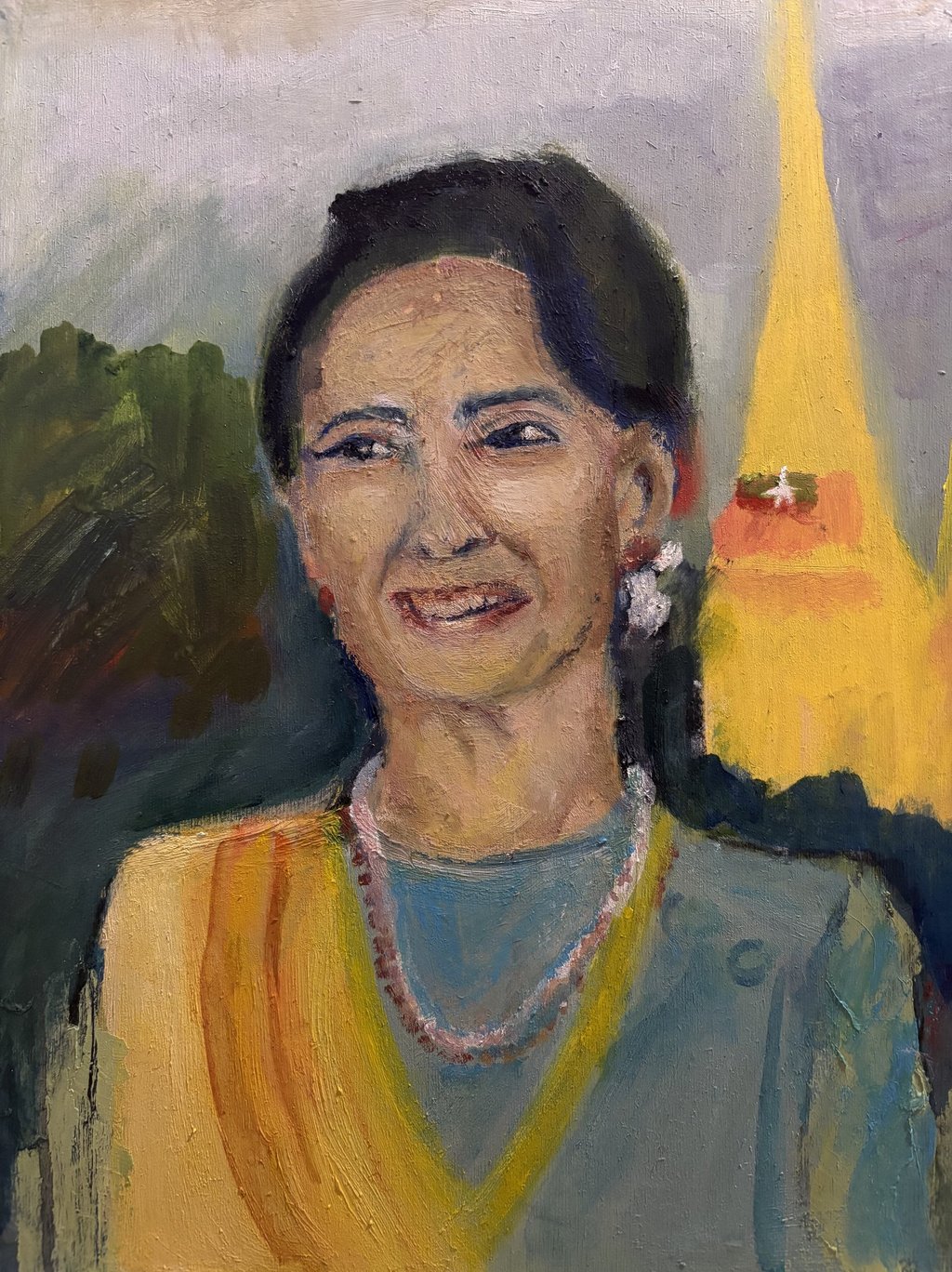
Aung San Suu Kyi is a Burmese politician, diplomat, and author. She was born on June 19, 1945, in Rangoon (now Yangon), Burma (now Myanmar), and is currently alive, though she remains imprisoned following a military coup.
Aung San Suu Kyi was awarded the 1991 Nobel Peace Prize for "her non-violent struggle for democracy and human rights" in Myanmar. Her father, General Aung San, is considered the architect of modern Burma, which heightened her status as a symbol of the nation's democratic aspirations.
She returned to Myanmar in 1988 during a period of massive pro-democracy demonstrations and quickly became the leader of the movement, co-founding the National League for Democracy (NLD). Inspired by Mahatma Gandhi, she advocated for non-violent resistance against the ruling military junta. Though the NLD won a decisive victory in the 1990 general election, the military refused to hand over power. Suu Kyi was placed under house arrest, where she spent nearly 15 of the next 21 years as one of the world's most prominent political prisoners.
Following her release in 2010, she led the NLD to another landslide victory in 2015, becoming the State Counsellor, effectively the de facto leader of Myanmar. However, her international standing was later severely criticized for her perceived inaction and silence regarding the military's documented human rights abuses against the Rohingya minority in Rakhine State. Her period of political leadership was cut short when the military seized power in a coup in February 2021, arresting her and NLD leaders and returning the country to authoritarian rule. She remains a figure whose life encapsulates both the profound hope for and the complex challenges of democracy in Myanmar.
MLA style: Aung San Suu Kyi – Facts. NobelPrize.org. Nobel Prize Outreach 2025. Thu. 4 Dec 2025. <https://www.nobelprize.org/prizes/peace/1991/kyi/facts/
MLA style :Myanmar’s Nobel Peace Prize winner has remained silent about a crisis described this week by the U.N.’s human-rights chief as “a textbook example of ethnic cleansing.”Photograph by Soe Zeya Tun / Reuters