
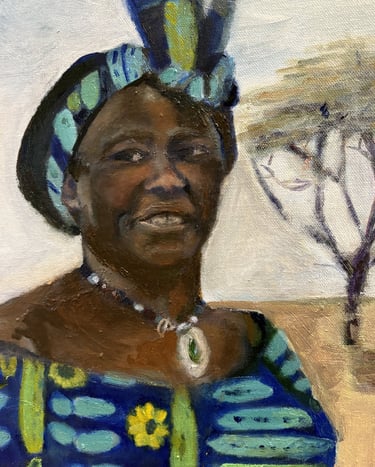
Wangari Muta Maathai was a pioneering Kenyan environmental activist and political figure. She was born on April 1, 1940, in Nyeri, Kenya, and passed away on September 25, 2011, in Nairobi. Maathai was a true trailblazer: she was the first woman in East and Central Africa to earn a doctorate degree, and the first female professor in her home country of Kenya.
She was the recipient of the 2004 Nobel Peace Prize, becoming the first African woman to be honored with the award. The Norwegian Nobel Committee recognized her for her contribution to sustainable development, democracy, and peace, noting her unique approach of combining environmental action with social and political change.
In 1977, Maathai founded the Green Belt Movement (GBM), a grassroots organization that focused on community-based tree planting.
Maathai's holistic philosophy was that securing the living environment is a prerequisite for peace on Earth. The Green Belt Movement successfully planted over 51 million trees across Kenya and its methods have been adopted internationally. She ultimately served as a member of Kenya's parliament and as Assistant Minister for Environment and Natural Resources, cementing her legacy as a figure who thought globally and acted locally to build a stronger foundation for democracy, women's rights, and a sustainable future.
MLA: Wangari Maathai – Speed read. NobelPrize.org. Nobel Prize Outreach 2025. Thu. 4 Dec 2025. <https://www.nobelprize.org/prizes/peace/2004/maathai/speedread/>https://www.greenbeltmovement.org/wangari-maathai/biography